IMPORTANT: DO NOT CLOSE THIS WINDOW OR CLICK THE "BACK BUTTON"
Your order is 100% secure, but it's not complete yet. Watch the welcome message below to proceed to the next page.
Want to know exactly which foods & TOXINS are destroying your body & exactly where you're nutrient depleted?
Advanced testing can help identify food sensitivities, nutrient deficiencies, and Environmental Toxins that may be impacting focus, behavior, and brain function.
Play the video to turn on sound
Discover Hidden Triggers Behind You OR YouR Child’s ADHD THROUGH OBJECTIVE TESTING!🔬
TIRED OF GUESSING? THEN START TESTING!
Many parents focus only on managing ADHD symptoms, but what if some of those symptoms are actually being triggered by hidden factors inside your child’s body?
For many kids, issues like poor focus, hyperactivity, irritability, and emotional outbursts can be influenced by things most parents never think to check — such as hidden food sensitivities or nutrient deficiencies.
Certain foods can trigger low-grade inflammation that affects how the brain functions. When this happens, it may make it harder for children to regulate emotions, stay focused, or control impulses. The challenge is that food sensitivities are often delayed reactions, meaning symptoms may show up hours or even days later. That makes them very difficult to identify on your own.
At the same time, the brain relies on a wide range of vitamins and minerals to support attention, mood, and healthy brain chemistry. Nutrients like magnesium, zinc, B vitamins, and others play important roles in supporting dopamine production, nervous system balance, and cognitive function. When these nutrients are low, it can make ADHD symptoms more difficult to manage.
This is why testing can be so helpful!
Instead of guessing, testing helps uncover hidden food triggers and nutrient deficiencies that may be impacting your child’s brain and behavior.
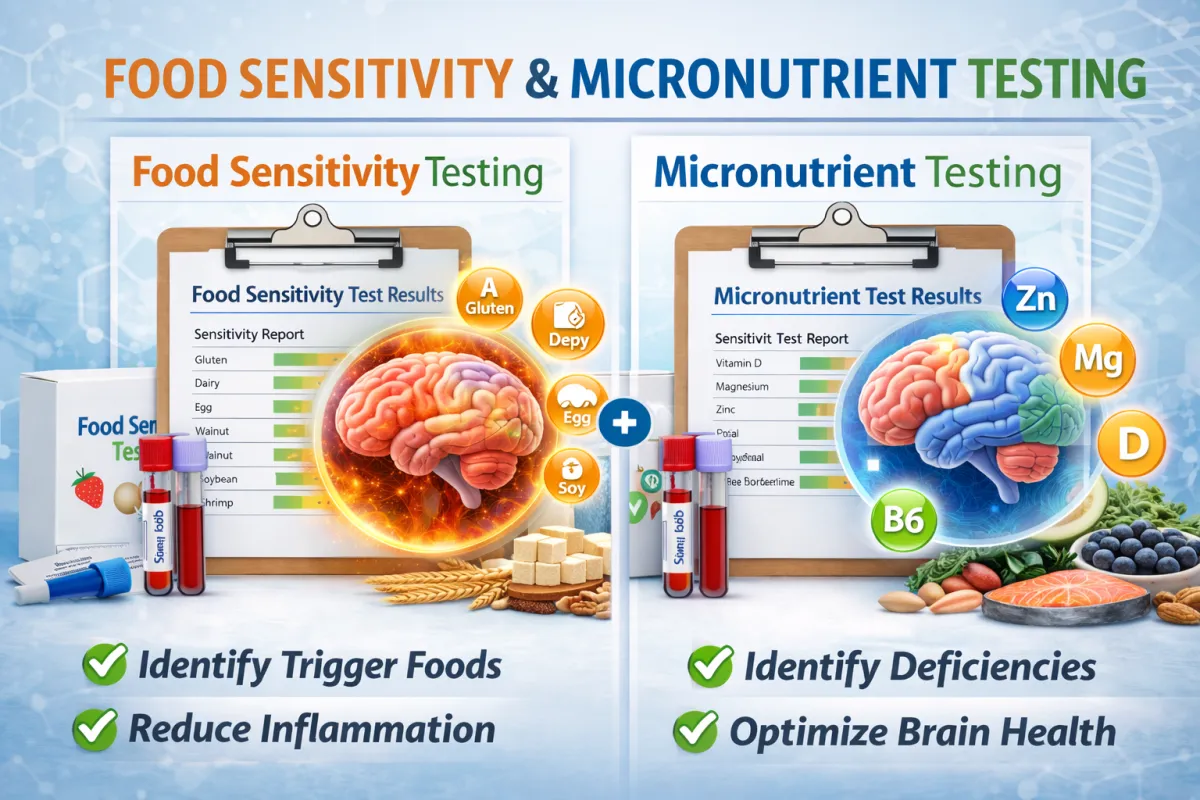
With Food Sensitivity Testing, you can identify specific foods that may be contributing to inflammation or worsening ADHD symptoms. Removing these triggers can sometimes lead to improvements in focus, mood, and overall behavior.
With Micronutrient Testing, you can see if your child may be lacking key vitamins or minerals that support healthy brain function. This allows you to make more informed nutrition decisions and better support your child’s developing brain.
With Environmental Toxin Testing, you can see what toxins may be impacting your child health. Removing these toxins can sometimes lead to improvements in focus, mood, and overall behavior.
The goal is simple:
Give parents clearer insights so they can make smarter choices that support their child’s health and focus.
Rather than guessing what might be contributing to ADHD symptoms, this testing provides a deeper look into potential underlying factors that may be worth addressing.
For parents who want to take a more proactive, root-cause approach, this can be an incredibly valuable next step.
Add a test package today and gain deeper insights into what may be affecting your child’s brain and behavior.
this is a New Member One Time Offer:
Pick which package works best for you!
✅ Remember, with both packages testing is DONE FROM HOME. You send us the samples, and we get them into the lab for analysis!
✅ Once results are in we can develop a strategic plan of attack moving forward.
option 1 - Screening Only - 40+ pages of information!
Option 1: Screening Only
Confirming This Means:
🧪 Identify Hidden Triggers – Discover if common foods and toxins may be contributing to focus issues, hyperactivity, or behavioral challenges. Discover if low vitamins or minerals may be contributing to ADHD symptoms.
🧠 Reduce Inflammation & Support Brain Health – Removing trigger foods and toxins may help support calmer behavior, while key nutrients play a critical role in dopamine, attention, and mood regulation.
🥗 Create a Personalized Nutrition Plan – Learn exactly which foods to avoid and which foods and nutrients your child may need to help support focus, energy, and brain health.
Regular Price: $497
Yours Today - Just One Easy Payment Of
Just $341
option 2 - Screening and in Depth Review Session!

Option 2 : Screening and Review Session
Confirming This Means:
🧪 Identify Hidden Triggers – Obtain all the data from our advanced screening package. See what foods, toxins, and nutrient deficiencies may be contributing to focus issues, hyperactivity, or behavioral challenges.
📊 Personalized Insights – Spend 1:1 time with an expert naturopath, who will guide you through the results. Get clearer answers about what may be affecting your child’s ADHD.
🧠 Strategic Action Plan – Based on the personalized results, your naturopath will construct a customized protocol to address your child's ADHD - holistically, without chemical cover-ups.
Regular Price: $997
Yours Today - Just One Easy Payment Of